

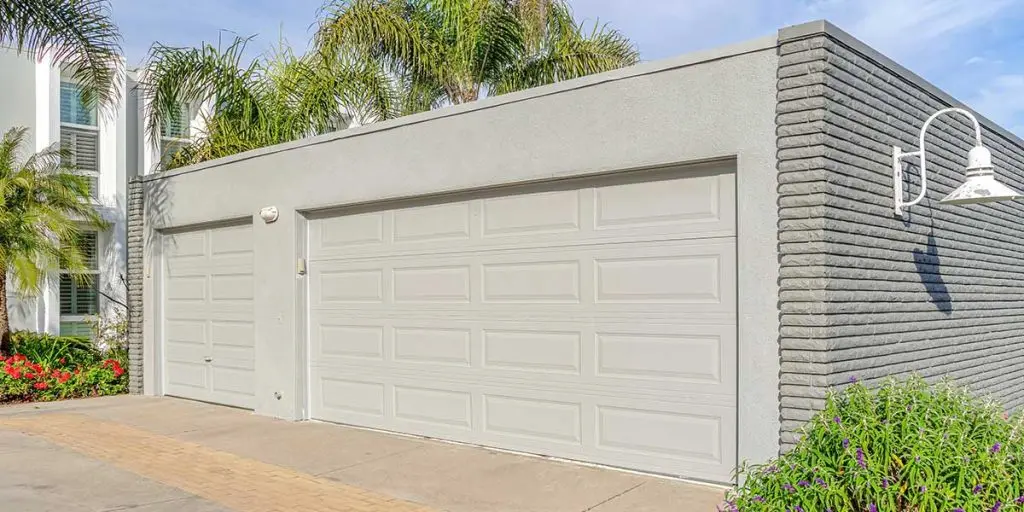
A garage door that rises a few inches and drops, races upward, or feels much heavier than usual is not simply inconvenient. Those changes can point to a balance problem, binding hardware, or another issue that makes the opener work harder than it should.
A garage door balance test is a limited observation, not a repair. If the door passes a careful visual check and your manufacturer permits manual testing, you can observe how it moves and whether it stays near a partly open position without touching springs, cables, drums, or tensioned hardware.
MN Garage Door Service helps homeowners in Golden Valley and across the Twin Cities find the root cause, compare transparent options, and protect the full system. This guide explains when a homeowner test is reasonable and what the result can tell you.
Garage Door Balance at a Glance
| Observation | What It May Mean | Safe Next Move |
| Door stays near the manual’s specified partly open position | The counterbalance appears to be doing its job at that position | Reconnect the opener exactly as the manual directs and continue routine observation |
| Door drops, rises quickly, or drifts far from position | The door may be out of balance | No. Stop using the door. Arrange a full-system inspection |
| Door binds, sticks, scrapes, or needs extra effort | Track, roller, hinge, alignment, or spring-system trouble may be present | Stop the test and arrange diagnosis |
| One side moves ahead of the other | A cable, drum, spring, or alignment problem may be involved | No. Stop using the door. Keep people away |
| Door feels unexpectedly heavy or needs two hands | The spring system may not be carrying the expected load | No. Stop using the door. Do not reconnect and cycle it repeatedly |
The table is a decision aid, not a diagnosis. A steady door can still have worn parts or another safety problem.
What Garage Door Balance Actually Means
Garage door springs counterbalance most of the door’s weight so the door can move through its tracks with controlled effort. The opener moves a correctly operating door, but it is not meant to replace the work of the spring system.
The U.S. Consumer Product Safety Commission describes a properly operating door as balanced when it stays in place after being stopped in a partly open position. The agency also says a door that binds, sticks, or is not balanced should be serviced by a professional.2
The exact test position and acceptable movement vary, so your current manuals take priority over generic online instructions.
A test cannot identify the component that caused the result. Springs, cables, rollers, tracks, sections, and installation geometry can all affect movement.
Why an Unbalanced Door Matters
An opener designed for a properly balanced door may strain when the door is heavy or binding. DASMA warns that awkward manual operation can indicate an out-of-balance spring system and says the condition can cause premature wear on other door components.1
The risk is not limited to opener wear. A severely unbalanced door can move unexpectedly, and uneven travel may involve loaded hardware.
Do not treat a higher force setting or larger opener as the correction. DASMA specifically notes that a heavy door may be out of balance and that the answer is not a more powerful opener.3
A useful inspection looks at the complete system rather than selling a motor for a spring or hardware problem.
Signs to Check Before Any Manual Test
Start with the door closed and the opener connected. From outside the opening, look and listen during no more than one normal automatic cycle.
Do not continue to a manual test if you notice any of these conditions:
- A visible gap in a torsion spring or a separated extension spring
- A frayed, loose, crossed, or off-drum cable
- One side of the door sitting lower than the other
- A roller outside the track or a visibly bent track
- A cracked hinge, damaged section, or loose bottom bracket
- New banging, popping, grinding, scraping, or violent shaking
- A door that is stuck, frozen to the floor, or obstructed
- Unexpected weight, rapid movement, or loss of control
If the door is crooked, heavy, unbalanced, or springs or cables may be involved, the answer is exact and immediate.
No. Stop using the door.
DASMA says cables should be inspected visually and replaced only by a trained technician because of the high spring tension involved. It also warns that spring-connected bottom brackets are under extreme tension and should be adjusted or loosened only by a trained door systems technician.1
If cold weather may have bonded the seal to the threshold, see why a garage door opens partially and then stops. Never use a balance test to force it free.
How to Perform a Conservative Garage Door Balance Test
Use this procedure only for a fully closed, level, undamaged door that passed the visual precheck. If the manual does not provide a homeowner test, stop and schedule service.
Safety Block: Read This Before Step 1
Keep children, pets, vehicles, and other people out of the garage and away from the opening. Never stand, walk, or reach under the door, and use only the manufacturer-designated lift handle or gripping point.
The door must be fully closed before the opener is disconnected. If the door is crooked, heavy, unbalanced, stuck, damaged, or showing any spring or cable concern: No. Stop using the door.
Do not loosen, wind, unwind, clamp, cut, lubricate, or adjust springs, cables, drums, pulleys, bottom brackets, tracks, or tensioned fasteners. This is an observation test only.
Step 1: Read the Door and Opener Manuals
Find the instructions for manual operation, emergency release, reconnection, and balance testing for your exact system. Model-specific instructions control the release position, test position, approved gripping points, and reconnection method.
DASMA advises keeping both manuals near the door because each model has its own safety instructions.1 If a lock, automatic door lock, unusual track layout, or wall-mount opener changes the procedure, do not improvise.
Step 2: Close the Door and Secure the Area
Close the door completely with one normal opener cycle while watching from a safe position. If it does not close level and normally, cancel the test.
Turn off or unplug the opener as directed, and prevent anyone from using remotes or wall controls. Do not open the housing or touch wiring.
Step 3: Disconnect the Opener as Directed
With the door fully closed, use the emergency-release handle exactly as your opener manual describes. The CPSC’s homeowner guidance likewise starts with the door closed before using the quick-release mechanism for a manual check.2
Do not pull the release on a raised door. If springs are weak or broken: No. Stop using the door.
Step 4: Move the Door Only by the Designated Handle
From a stable position beside the door, not beneath it, raise the door slowly to the position specified by the manual. Many manufacturer procedures use approximately halfway, but your manual controls.
The movement should be smooth and manageable without jerking, binding, or unusual effort. Keep a controlled grip and never place fingers between door sections.
If the door feels unexpectedly heavy, needs two hands, moves crooked, sticks, or accelerates, stop the test. No. Stop using the door.
Step 5: Observe, Lower, and Reconnect
At the specified test position, ease your support only enough to observe whether the door remains near that position. Do not let go abruptly, step underneath, or try to catch a door that starts moving quickly.
Lower the door carefully using the designated handle, then reconnect the opener exactly as the manual directs. Do not resume automatic operation if the door rose, fell, drifted substantially, bound, stuck, or moved unevenly.
After reconnection, confirm engagement using the manual’s method before normal use. If you are not certain the trolley, lock, or wall-mount mechanism reconnected correctly, leave the opener off and arrange service.
How to Read the Result
A door that moves smoothly and remains near the manual’s specified position has produced a normal observation for that part of the check. It has not received a clean bill of health for every roller, hinge, cable, spring, sensor, or opener setting.
A door that drops suggests the counterbalance may not be carrying enough of the door’s weight. A door that rises quickly may indicate excessive counterbalance, while binding or sticking can point to resistance elsewhere in the system.
Do not use the direction of movement to select an adjustment. Door weight, spring and cable condition, drum geometry, and installation details require trained assessment.
If one side leads, the door racks in the opening, or a cable becomes visibly slack, do not try to straighten it. No. Stop using the door.
A failed or uncertain result is a reason for a garage door tune-up and full-system inspection, not a reason to repeat the test until the door happens to stay put.
What Not to Do After a Failed Test
Never wind a spring, move a winding cone, tighten a cable, reset a drum, or loosen a bottom bracket. Do not use improvised tools or online turn-count formulas.
Do not increase opener force, change travel limits, or keep cycling a heavy or binding door. Those actions do not restore balance and can add stress.
Do not pull the emergency release again on a door that did not stay controlled. Keep the area clear and explain exactly what you observed when you schedule service.
For broader safety planning, review the company’s garage door safety and security guide. Balance, reversal, sensors, hardware, and controls all need to work as one system.
What a Professional Balance Inspection Includes
A professional visit should begin with the symptoms and inspect the complete system. That includes door position, springs, cables, drums, rollers, hinges, tracks, sections, the opener attachment, manual movement, and safety operation.
Not every failed test needs the same part. A roller, track, section, spring, cable, or combined problem can create similar observations.
Ask which finding is urgent, which work is preventive, and what each option changes. MN Garage Door Service focuses on clear choices and longevity, so the recommendation should connect the proposed repair to the root cause.
If you want to understand the broader process, see what technicians check during garage door inspections. Homeowners can also use the company’s guide to how often garage door maintenance should be done to plan future checks.
What Can Garage Door Service Cost?
For general national planning, a current Bob Vila garage door maintenance guide places a professional tune-up at $150 to $350, depending on the door type, location, and whether small parts need replacement. That is not MN Garage Door Service pricing and is not a Twin Cities quote.
A balance concern can cost more or less depending on what inspection finds. Door size, spring configuration, damaged hardware, access, and required parts can change the scope.
A useful quote separates inspection, required safety work, and optional longevity improvements. Transparent options let you decide with the cause and complete scope in view rather than approving a generic adjustment.
Frequently Asked Questions
Can I Test Garage Door Balance Myself?
Yes, but only as a limited observation when the door is closed, level, undamaged, and normal during the visual precheck, and when the exact manufacturer manual provides a procedure. If the door is heavy, crooked, stuck, damaged, or showing spring or cable trouble: No. Stop using the door.
Where Should a Balanced Garage Door Stay?
Use the position stated in the manual for your exact system. Many procedures use a partly open or approximately halfway position, where the door should remain near that point rather than rising or falling rapidly.
What If My Garage Door Falls During the Test?
No. Stop using the door. Do not adjust the springs, cables, drums, opener force, or travel limits, and arrange a professional full-system inspection.
What If My Garage Door Rises by Itself?
No. Stop using the door. Rapid upward movement or substantial drift can indicate excessive counterbalance or another system problem that needs trained diagnosis.
Can I Adjust the Springs After a Failed Balance Test?
No. Stop using the door. Springs, cables, drums, bottom brackets, and related hardware can be under extreme tension and should not be adjusted by a homeowner.
Can an Unbalanced Door Damage the Opener?
Yes. An opener is designed to move a properly balanced door, and a heavy, binding, or awkward door can add strain and contribute to premature wear.
How Often Should I Check Garage Door Balance?
Follow the inspection schedule in your door and opener manuals. DASMA recommends monthly homeowner safety checks and an annual visit from a trained door systems technician, but model-specific instructions may add requirements.
Get a Clear Answer Before the Next Cycle
A balance test should help you decide whether the door appears controlled, not tempt you into a spring adjustment. When the result is abnormal or uncertain, stop using the system and have the cause identified before another automatic cycle.
MN Garage Door Service provides full-system inspection and transparent options for homeowners in Golden Valley and across the Twin Cities. Call (763) 335-1347 to schedule service focused on safe operation, root-cause diagnosis, and long-term reliability.