

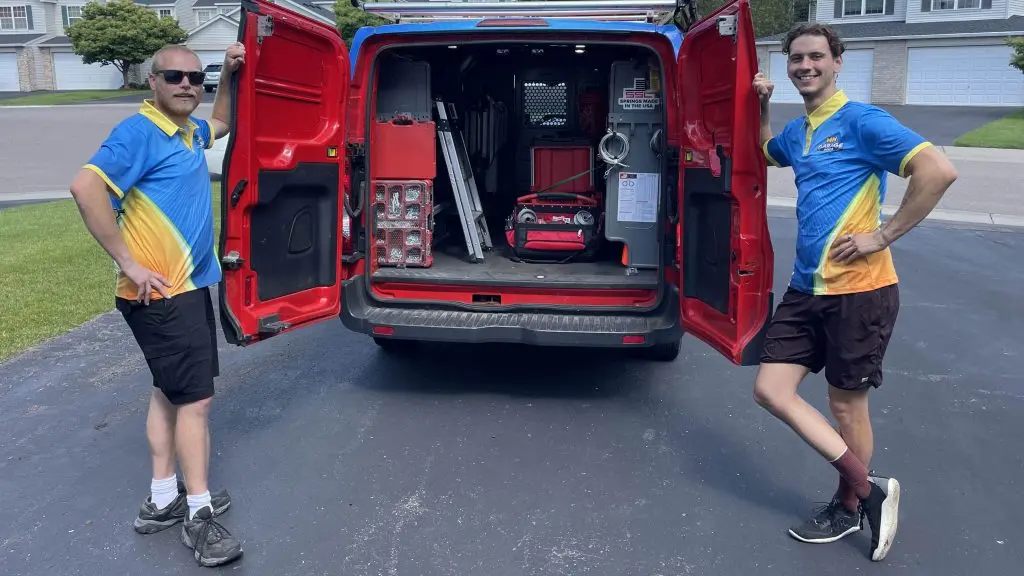
Most homeowners have never watched a professional garage door repair service happen from start to finish. The door breaks, someone shows up, something gets fixed, and the door works again. What happens between arrival and departure rarely gets explained, and that gap is exactly where the difference between a thorough repair and a temporary fix lives. Understanding what a professional service visit actually involves helps you recognize whether the company you called is solving the problem or addressing the symptom. Here is a complete walkthrough of what happens when MN Garage Door Service arrives at a job.
Step 1: Real-Time Communication Before the Technician Arrives
The visit begins before anyone sets foot in your garage. You receive a notification with real-time GPS tracking so you can plan your day without clearing your schedule for an uncertain window. The technician calls ahead to confirm timing and will often reach out early to see if an earlier arrival works. That level of communication is not a courtesy feature added on top of the service. It is the first signal of how the entire visit will be handled.
Step 2: The Initial Conversation
Before touching a single component, the technician starts by listening. What has the door been doing? When did the behavior start? Is it consistent every cycle or intermittent? Did anything change recently, a vehicle impact, a power outage, a cold snap, or an unusual sound that appeared before the main problem? These details provide diagnostic context that a visual inspection alone cannot supply. A door that reverses unexpectedly after cold weather tells a different story than one that has reversed intermittently for weeks regardless of temperature.
Step 3: The Full System Assessment Before Any Tools Come Out
This is the most important and least visible part of any garage door repair service call, and it is the step that most rushed providers skip entirely. Before reaching for a single tool, the technician runs the door through a full cycle while watching and listening carefully. How does the spring system look under load? Where does the opener hesitate? Does the door travel evenly on both sides or does one side lag? Is the sound consistent throughout the cycle or does it change at a specific point in the travel? That observational pass under real operating conditions reveals root causes that a stationary inspection never surfaces.
We have arrived at jobs where the presenting symptom was a loud popping noise during closing. The full cycle assessment revealed a loose drive chain, a photo-eye sensor shifted out of alignment, and an extension spring in a low-clearance configuration intermittently catching on the side of the track, along with a header bracket that had worked itself loose from vibration. None of those issues were visible from a standing inspection. All of them became clear the moment we watched and listened to the door move under real load.
Step 4: The Diagnostic Finding and Transparent Explanation
Once the assessment is complete, the technician explains exactly what was found before any work is agreed upon. Findings are documented with photos and walked through with the homeowner in plain language. You see the worn cable, the misaligned bracket, the spring with compromised tension. You understand what needs to happen and why before agreeing to anything.
This step is non-negotiable in a thorough repair service because a recommendation only means something when it comes from honesty. We do not recommend repairs you do not need, and we do not begin work until you have a clear picture of what was found and what the repair involves.
Step 5: The Repair Itself
The repair begins only after the diagnostic conversation is complete and the homeowner has agreed to proceed. What happens during the repair depends on what was found, but every repair at MN Garage Door Service involves more than the failed component. It involves the adjacent components affected by that failure.
A spring replacement does not just mean removing the old spring and installing a new one. According to DASMA, the Door and Access Systems Manufacturers Association, residential torsion springs are rated for approximately 10,000 cycles under standard conditions. The replacement spring is specified by wire diameter, inside diameter, winding direction, and length to match the door’s exact weight and drum configuration. Cable condition is checked because a spring running weak for months places extra stress on the cables and drums. Rollers are evaluated. Hardware is checked for looseness. The repair is treated as a system intervention, not a parts swap.
Step 6: Post-Repair Spring Tension and Balance Verification
After any repair involving the spring system, the door must be tested for balance before the opener is reconnected. The technician disconnects the opener using the manual release cord and lifts the door to the halfway point. A properly balanced door stays in place without dropping or rising. If it drops, spring tension is insufficient. If it rises, tension is too high. The technician adjusts until balance is confirmed.
This step is what the 8-year spring warranty we provide is built on. It is not a sales commitment. It is the direct result of getting tension calibration correct before the opener is ever reconnected. A spring installed at the wrong tension fails ahead of its rated cycle life and places the opener motor under load it was not designed to carry.
Step 7: Force Limit and Travel Limit Calibration
Force limits and travel limits are two separate calibrated settings stored on the opener’s logic board, and both must be verified after any repair that affects door weight or movement. Travel limits control the exact positions where the door stops at open and closed. Force limits control how much resistance the motor applies before triggering the auto-reverse safety feature.
The critical detail most homeowners do not know is that force limit calibration must be tested under real operating conditions, not at rest. A force limit that appears correct during a stationary test can behave differently once the door is moving under the full load of a real cycle. We test force limits while the door is operating, applying measured resistance at the closing point to confirm the door reverses within the correct threshold. If it does not, the limit is adjusted until it does.
Step 8: The Safety Verification
The post-repair safety checks are not optional steps performed at the end of a visit when time allows. They are the standard that determines whether the job is actually finished. Every repair service at MN Garage Door Service concludes with three non-negotiable checks.
The auto-reverse obstruction test places a small object in the door’s path and confirms the door reverses on contact without hesitation. The sensor alignment check confirms both photo-eye sensors are aimed correctly and the indicator lights confirm an uninterrupted beam. The manual release cord check confirms the door can be safely operated by hand in the event of a power outage. These tests are performed after the repair is complete and the system is fully calibrated, because safety features under real load conditions can behave differently than they do before the repair is finished.
Step 9: The Final Walkthrough and Documentation
The visit concludes with a clear summary of everything that happened. What was repaired, what was found during the assessment, what was adjusted or lubricated beyond the primary repair, and what will need attention in the future based on the current condition of other components. This documentation gives you a complete picture of where your system stands and a foundation for planning the next service visit before an issue becomes urgent. You leave the conversation understanding exactly what was done, why it was done, and what to watch for going forward.
What Separates a Thorough Garage Door Repair Service From a Quick Fix
The difference between a repair that holds and one that leads to a repeat call lives in the steps that happen after the visible work is done. Diagnostic discipline before tools come out. Transparent findings before work begins. Correct component specification during the repair. Post-repair balance verification. Force and travel limit calibration under real operating conditions. A full safety check before the technician leaves. These are not premium add-ons. They are the baseline of a professional garage door repair service done correctly. When any of those steps are skipped, the symptom may disappear temporarily while the root cause continues to stress the system.
Schedule Your Garage Door Repair Service With MN Garage Door Service
Knowing what a professional garage door repair service actually involves helps you hold any provider to the right standard. MN Garage Door Service delivers every step described in this article on every job, backed by second-generation expertise, same-day availability, and a 40-point inspection that covers the full system before we consider any visit complete. Schedule your garage door repair service with MN Garage Door Service today and experience what it looks like when the job is done correctly from the first assessment to the final safety check.