

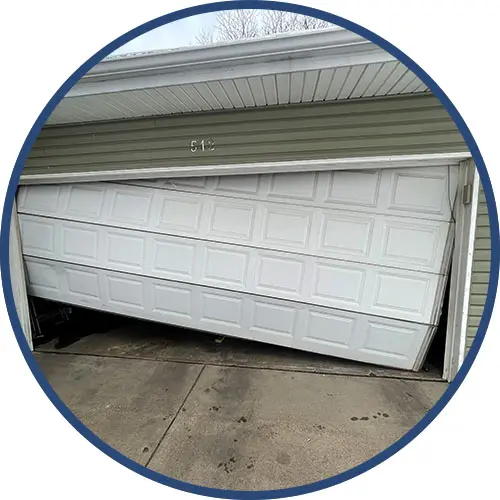
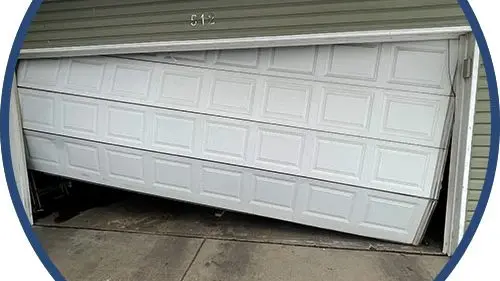
Choosing a garage door replacement feels like a design decision. You look at styles, compare colors, and picture how the finished door will look from the street. That part matters, but it is only half of the decision and the easier half. What most homeowners discover too late is that a garage door replacement is also a mechanical decision, one where the wrong choice affects the springs, the opener, the tracks, and how long everything in the system lasts. We have replaced openers within the first year of a door installation because the new door was significantly heavier than the old one and no one verified the opener’s rated capacity before the project began. That single oversight turned a replacement into two repairs. Understanding what actually goes into choosing the right door protects both your investment and your system.
Why a Garage Door Replacement Is More Than a Visual Upgrade
A new garage door does not arrive as a standalone product. It arrives as the heaviest moving component in a mechanical system that everything else is calibrated around. The springs are tensioned to counterbalance a specific door weight. The opener is rated for a specific maximum load. The tracks are configured for a specific door height and panel construction. When the door changes, every one of those calibrations potentially changes with it. A replacement that ignores these relationships transfers stress onto components not sized for the new load on every single cycle.
Start With Your Space: Headroom, Backroom, and Side Room
Before any door is selected, three spatial measurements determine what is possible in your garage. Headroom is the clearance between the top of the door opening and the ceiling. A standard track configuration requires a minimum of ten to twelve inches. If your garage has less, a low-headroom track kit is required, and not every door style is compatible with that hardware. Backroom is the depth behind the opening needed for the horizontal track once the door is open. A standard door needs roughly the door height plus eighteen inches of backroom. Side room is the clearance on each side for the vertical track and spring hardware.
We have arrived at consultations for older homes where the homeowner had already ordered a door before these measurements were taken. In several cases, the backroom depth was insufficient for a standard track, and the garage required a high-lift conversion that added both cost and time. These measurements are not details to confirm after the door is chosen. They are the starting point.
Choosing the Right Material for Your Home and Climate
Material selection determines how the door performs in Minnesota’s freeze-thaw climate, how much maintenance it demands, and how well it insulates the space.
Steel
Steel is the most practical choice for most Minnesota homeowners and the material we install most frequently. It resists freeze-thaw moisture cycles that cause wood to warp, holds paint well over time, and is available with polyurethane foam injection reaching among the highest R-values of any residential door construction.
Wood
Wood offers design flexibility that steel cannot fully replicate, particularly for carriage house styles on older or custom homes. In Minnesota’s climate, wood requires consistent maintenance including periodic sealing and refinishing to prevent moisture infiltration, warping at the bottom corners, and swelling that causes binding in the track during seasonal transitions.
Aluminum
Aluminum is lightweight and does not rust. In practice, it dents more easily than steel, carries significantly lower insulation values, and becomes less structurally reliable in extreme cold. For attached heated garages in Minnesota, aluminum is rarely the most practical choice.
Composite and Fiberglass
Composite and fiberglass doors offer wood aesthetics with lower maintenance demands and resist moisture well. The tradeoff in Minnesota is brittleness. Fiberglass in particular can become fragile in sustained subzero temperatures and is more prone to cracking on impact than steel or wood.
Understanding Insulation and R-Value
R-value is the standard measure of a door’s thermal resistance, and one of the most misunderstood specifications in the replacement process. A non-insulated single-skin steel door carries an R-value near zero. A polystyrene-backed door typically reaches R-6 to R-8. A two-inch polyurethane-injected door, where foam is chemically bonded to both steel skins, reaches R-12 to R-18 depending on foam thickness and density.
For attached garages in Minnesota, R-value is not a comfort preference. The garage wall shares thermal contact with the living space, meaning the temperature inside an uninsulated garage directly affects the heating load of adjacent rooms. Choosing a door with a genuine polyurethane core rather than polystyrene backer boards is the difference between R-8 and R-16 in a structure that cycles through thirty-degree temperature swings every day during a Minnesota winter.
Matching Door Weight to Your Opener and Spring System
This is the most technically critical decision in any garage door replacement and the one most often overlooked. Every opener carries a rated maximum door weight. Every spring system is tensioned to counterbalance a specific door weight within a specific tolerance. When a new door is heavier than the one it replaces, both calibrations are wrong from the first cycle.
We have seen drive gears stripped within the first year of a replacement because the new door added forty to sixty pounds over the original and no one evaluated the opener for the change. The motor ran, the door moved, and the damage accumulated until the gear failed. Springs must be recalculated and replaced when the door weight changes, accounting for the door’s exact weight, wire diameter, inside diameter, length, and drum configuration.
Spring sizing and tension calibration for a new door must be handled by a professional. We back our spring installations with an 8-year warranty because every spring we install is matched to the specific door it supports and set to the correct tension before we leave the property.
Choosing the Right Style for Your Home
The main residential styles include raised panel, carriage house, contemporary flush, and full-view aluminum. The raised panel fits the widest range of home styles. Carriage house designs work well on craftsman, colonial, and traditional homes. Contemporary flush panels suit modern architecture. Full-view aluminum with glass sections maximize light in garages used as workspaces.
On older homes, style selection sometimes reveals structural considerations. Heavier decorative panel designs and doors with significant glass content add weight that must be accounted for in the spring and opener specification. We have worked on installations where the homeowner’s chosen style required a spring upgrade and opener replacement to support the additional load. Knowing this before the door is ordered is how you avoid surprises on installation day.
Selecting the Right Opener for Your New Door
The opener should be part of the replacement decision, not an afterthought. Door weight and height determine the horsepower required. Belt-drive openers deliver quieter operation than chain-drive, which matters in homes with living spaces above or adjacent to the garage. Side-mount openers, which attach to the wall beside the door rather than the ceiling, are the right solution for garages with insufficient headroom for a standard rail.
We install and service LiftMaster openers, and we evaluate the opener as part of the same specification conversation as the door. Smart home compatibility through MyQ, which allows remote monitoring and control via smartphone, is worth considering at replacement time since adding it later may require a unit upgrade.
What to Expect During a Professional Garage Door Replacement
A professional replacement begins with a consultation that confirms the three spatial measurements, the existing spring specification, the opener’s rated capacity, and the door weight of the selected replacement. Once those are verified and incompatibilities identified, the door is ordered to the correct size and specification.
On installation day, the old door and hardware are removed, the new door is installed and balanced, the springs are set to the correct tension, and the opener is tested under real operating conditions. At MN Garage Door Service, every installation concludes with a 40-point inspection that verifies spring balance, cable seating, roller alignment, sensor function, force limits, travel limits, and auto-reverse performance before the job is considered complete.
Why the Wrong Replacement Choice Costs More in the Long Run
A door chosen without verifying opener compatibility, spring specification, and spatial clearances creates a system that is slightly wrong on every cycle. Slight mechanical stress compounds over thousands of cycles into significant damage. The cost of doing the specification work correctly at the start is always less than the cost of a replacement followed by an opener replacement and spring recalibration within the first year.
Schedule Your Garage Door Replacement Consultation With MN Garage Door Service
Choosing the best garage door replacement starts with the right measurements, the right material for your climate, the right insulation for your space, and the right mechanical match between the door, the springs, and the opener. MN Garage Door Service provides expert replacement consultations and professional installation across the Twin Cities metro and surrounding communities, with second-generation expertise, transparent findings, and warranty-backed work on every project. Schedule your consultation with MN Garage Door Service today and get the replacement right from the first conversation.