

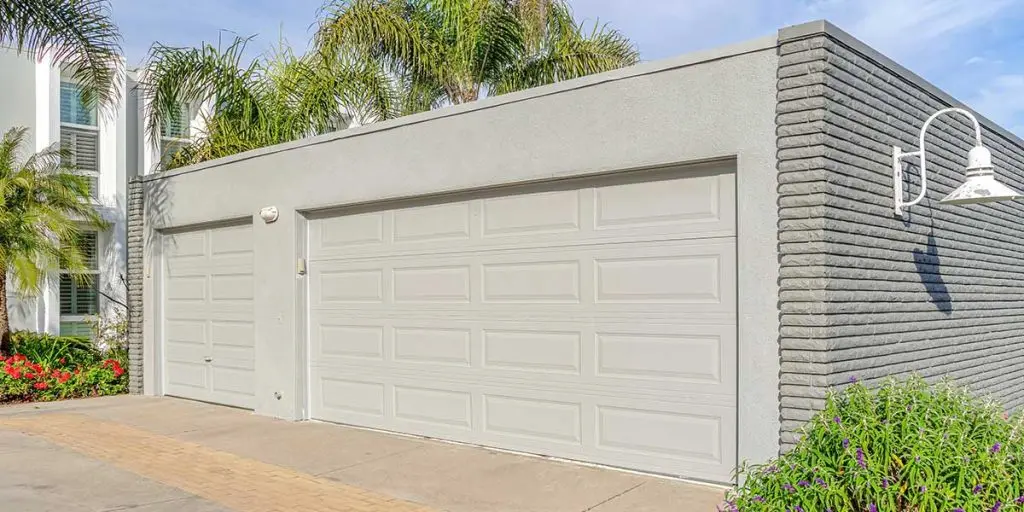
A summer storm crosses the Twin Cities, the power flickers, and a wide garage door begins rattling in its tracks. That movement does not automatically mean the door will fail, but it is a good reason to ask whether the door, track, bracing, and attachment points are suited to the home.
MN Garage Door Service helps homeowners make that decision without pushing the most expensive product. The right answer may be a wind-rated replacement, a repair to a damaged system, or simply confirmation that the current door is appropriate for the site.
What Garage Door Wind Resistance Actually Means
Wind resistance is the ability of a complete garage door system to withstand pressure pushing toward the garage and suction pulling away from it. The label does not describe the steel skin alone. Sections, reinforcement struts, hinges, rollers, tracks, brackets, fasteners, jamb attachment, and the surrounding structure all participate in the load path.
A large garage opening receives pressure across many square feet. That is why a door can bow at the center even when its individual panels still look intact, and why an apparently heavy door is not necessarily a tested wind-resistant door.
Manufacturers commonly describe products through a design pressure, test standard, wind-speed application, or engineering documentation. Those values are not interchangeable without the assumptions behind them, including door size, exposure, building height, opening location, and positive versus negative pressure.
Ask for documentation that matches the exact door width, height, model, track, hardware package, and installation method. A rating for a smaller door or a different reinforcement package does not automatically transfer to your opening.
Minnesota Has Serious Wind, but This Is Not Hurricane Code
The Minnesota Department of Labor and Industry identifies the 2020 Minnesota Residential Code as part of the state building-code set. Local permit and plan-review requirements still matter, so the useful question is not, “Is this hurricane rated?” but, “What design criteria and product documentation apply to this address and opening?”
Minnesota homeowners do not need a Florida hurricane label simply because a thunderstorm can be violent. The state has its own residential design criteria, and Minnesota Rule 1309.0301 lists a 115 mph wind design speed while directing wind exposure to be determined for the specific site.
That distinction prevents two bad outcomes. One is under-specifying a broad, exposed opening because the home is far from a coast; the other is selling a costly coastal package without evidence that the Minnesota project needs it.
Twin Cities storms still deserve respect. The National Weather Service defines a severe thunderstorm as capable of producing wind gusts of 58 mph or higher, and notes that some storms can produce winds over 100 mph.3
When a Wind-Rated Upgrade May Be Worth It
A wind-resistant garage door becomes a stronger candidate when the opening is broad, highly exposed, already damaged, or part of a permitted project requiring documented performance. The decision should begin with the house and site rather than a feature checklist.
Consider a closer wind-load review when:
- A double-wide door faces an open field, long street corridor, lake, or other unobstructed approach.
- The current door bows, shudders, leaves the tracks, or shows loose attachment points during ordinary windy weather.
- Panels are creased, cracked, rusted through, or weakened around hinges and strut fasteners.
- Tracks, jambs, or framing show movement, splitting, corrosion, or previous improvised repairs.
- An addition, rebuild, insurance repair, or permitted replacement triggers documentation from the local authority.
- The garage contains living space above it or connects directly to the home, increasing the practical consequences of opening failure.
A site with neighboring houses and mature trees can have a different exposure than a similar house at the edge of a subdivision. Trees are not engineered wind protection, however, and falling limbs add another hazard.
Door width matters because pressure acts over area. A wide double door often needs more attention to section stiffness and reinforcement than a single door, although only the product documentation and project conditions can settle the specification.
When You Probably Do Not Need the Biggest Upgrade
Not every Twin Cities home needs the highest wind package available. A sheltered single-car opening with sound framing, a correctly installed modern door, and no project-specific requirement may already have an appropriate system.
Visible vibration also does not prove that the door itself lacks wind resistance. Loose track fasteners, worn rollers, damaged hinges, poor alignment, a cracked panel, or weak jamb attachment can create movement that calls for repair rather than full replacement.
This is where a root-cause inspection saves money. MN Garage Door Service can evaluate the opening, current door, hardware, track attachment, and operating condition before recommending garage door installation or a more targeted correction.
If the existing door is structurally sound and the issue is maintenance, a full-system inspection and tune-up may be the sensible next step. A wind rating should solve a documented need, not serve as a vague premium label.
What a Proper Wind-Resistance Review Should Cover
A useful review starts outside. The technician should note the door’s orientation, nearby terrain, opening width and height, signs of panel deformation, and the condition of the perimeter framing.
Inside, the review should follow the load path. That includes section joints, hinges, reinforcement, rollers, tracks, brackets, fastener spacing, jamb material, header area, and evidence that hardware has pulled or shifted.
The operating system matters too. A reinforced door can weigh or flex differently, so the spring system and opener setup must be compatible with the installed door rather than treated as unrelated accessories.
The local building department determines what it will accept for a permitted project. Depending on scope, it may request product approvals, engineering details, installation instructions, or confirmation that the opening framing can receive the specified anchors.
Before approving a proposal, ask these questions:
- What exact wind or pressure documentation applies to this door size and model?
- Does the quoted hardware package match that documentation?
- Are tracks, brackets, fasteners, and jamb attachment included in the specification?
- Does the existing framing need repair or reinforcement first?
- Is a permit required for this scope at my address?
- What part of the recommendation is code-driven, site-driven, or condition-driven?
Clear answers are more useful than a generic claim that a door is “storm ready.” If replacement is justified, compare complete systems through the company’s garage door replacement service, not panel appearance alone.
How to Compare Wind-Resistant Door Proposals
Two estimates can name similar-looking doors while covering very different systems. Put the door dimensions, model number, reinforcement option, track gauge, bracket package, jamb attachment, removal, disposal, permits, and finish side by side before comparing the bottom line.
Look for the document that connects the proposed assembly to its performance claim. A brochure may introduce a product family, but installation instructions, test information, or project-specific engineering should identify the combinations that actually qualify.
Windows deserve specific attention because their size, placement, glazing, and frame construction can change the approved configuration. Do not assume a solid-panel rating remains the same after decorative glass is added to the order.
Also ask whether the proposal corrects defects around the opening. New reinforced sections cannot transfer wind loads properly if brackets fasten into split, deteriorated, undersized, or poorly anchored jamb material.
A heavier or more rigid assembly may require different springs and opener settings, but the opener should not be used to compensate for a poorly balanced door. After installation, the door should travel smoothly, seal evenly, and operate with the safety features set according to the equipment instructions.
Finally, separate required work from optional upgrades. Insulation, windows, premium finishes, smart controls, and higher wind performance can all be valuable, but they solve different problems and should be priced clearly.
A no-pressure recommendation should explain why each line item belongs. If ordinary repair restores a sound door and no code, site, or documentation need supports replacement, the estimate should say so.
Reinforcement Is a System, Not a DIY Brace
Horizontal struts can help stiffen door sections when they are part of the manufacturer’s specified assembly. Heavier tracks, closer bracket spacing, approved anchors, upgraded hinges, and suitable jamb construction may also be part of a tested or engineered system.
Adding random lumber, angle iron, or extra fasteners can interfere with travel, overload hardware, split framing, or create a false sense of security. A field modification can also depart from the manufacturer’s instructions and make the documented rating meaningless.
Springs, cables, bottom brackets, and drums are tensioned hardware. No. Stop using the door. Do not loosen, adjust, cut, clamp, or remove those parts, and keep people away until a trained garage door technician has made the system safe.
If the door is crooked, partly out of the track, unusually heavy, or hanging by a cable, No. Stop using the door. Do not try to force it closed for an approaching storm; call for professional service and follow official weather-safety instructions from a safe location.
For broader household guidance around the door and opener, review MN Garage Door Service’s garage door safety and security information.
Minnesota Weather Changes the Installation Details
Wind is only one Minnesota load on a garage door. Seasonal temperature swings affect metal dimensions, lubricants, seals, and batteries, while road salt and wet slush can accelerate corrosion along bottom fixtures and lower sections.
Frozen weatherstripping can stick to the floor. If an opener pulls against a frozen door, the resulting stress can damage sections or hardware, so clear ice and confirm free movement rather than repeatedly pressing the remote.
Snow piled against the outside of the door adds resistance and moisture at the bottom edge. Keeping the threshold clear helps the door close evenly and lets the bottom seal do its job without becoming an unintended structural brace.
These conditions do not change a documented wind rating by themselves, but they can expose weak hardware, poor balance, corrosion, or attachment problems. A door that operates smoothly in October may reveal a root cause during January cold or a June thunderstorm.
What Does a Wind-Resistant Garage Door Cost?
Pricing depends on door size, material, insulation, windows, finish, reinforcement package, tracks, hardware, framing work, removal, permits, and labor. As a broad national reference, one consumer cost guide places garage door replacement at about $1,500 to $6,000, including labor and materials, with a reported national average near $2,500.
That is not a Twin Cities quote and does not isolate the cost of wind reinforcement. A standard single door with sound framing can land very differently from a custom double door that needs new track, structural attachment work, or project-specific documentation.
The best comparison is an itemized proposal for the same opening and scope. Ask what is included, which exact product documents support the recommendation, and whether any framing or electrical work is excluded.
MN Garage Door Service works from the cause of the problem and the needs of the home. Homeowners across the Twin Cities service area can request an evaluation without assuming in advance that the answer must be the most expensive door.
A Practical Decision for Your Home
Choose wind resistance with the same care you would use for any structural feature: verify the requirement, match the product to the opening, and install the complete specified system. Do not shop by an mph number without matching product documentation or by the thickness of the front skin.
If your door bows in ordinary wind, has damaged sections, or sits on an exposed site, schedule an assessment before the next storm season. Call MN Garage Door Service at [(763) 335-1347](tel:+17633351347) or visit 1405 Lilac Dr N Suite 251GA, Golden Valley, MN 55422 to discuss the home, the opening, and the evidence behind each option.
Frequently Asked Questions
Do Minnesota Homes Need Hurricane-Rated Garage Doors?
Usually, no. Minnesota projects should follow Minnesota and local requirements, not assume coastal hurricane provisions apply. An exposed site, unusual opening, engineered design, or local permit review can still justify a documented wind-resistant system.
What Does a Garage Door Wind Rating Mean?
It describes the performance of a specific door system under defined wind-pressure conditions. The rating depends on the exact door size, sections, reinforcement, tracks, brackets, fasteners, attachment method, and installation instructions.
Is 115 MPH the Wind Rating Every Minnesota Garage Door Needs?
No. Minnesota’s residential design-criteria table lists a 115 mph wind design speed, but a door specification depends on code method, exposure, opening size, product documentation, and local review. A design wind speed should not be treated as a storm forecast or copied directly onto a product label.
Can I Add My Own Braces Before a Storm?
No. Improvised bracing can damage the door, interfere with travel, or fail to transfer loads safely into the structure.
Never adjust springs, cables, drums, or bottom brackets. If those parts are involved, No. Stop using the door. Call a trained technician.
Can an Existing Garage Door Be Reinforced?
Sometimes, but only after identifying the door model, condition, hardware, tracks, attachment points, and manufacturer instructions. A damaged or undocumented older door may be a poor candidate, while a compatible system may have an approved reinforcement option.
How Do I Know Whether Repair or Replacement Is Better?
Start with a root-cause inspection. Loose hardware, worn rollers, alignment issues, or limited damage may be repairable, while creased sections, weak attachment points, extensive corrosion, or the need for documented wind performance may favor replacement.