

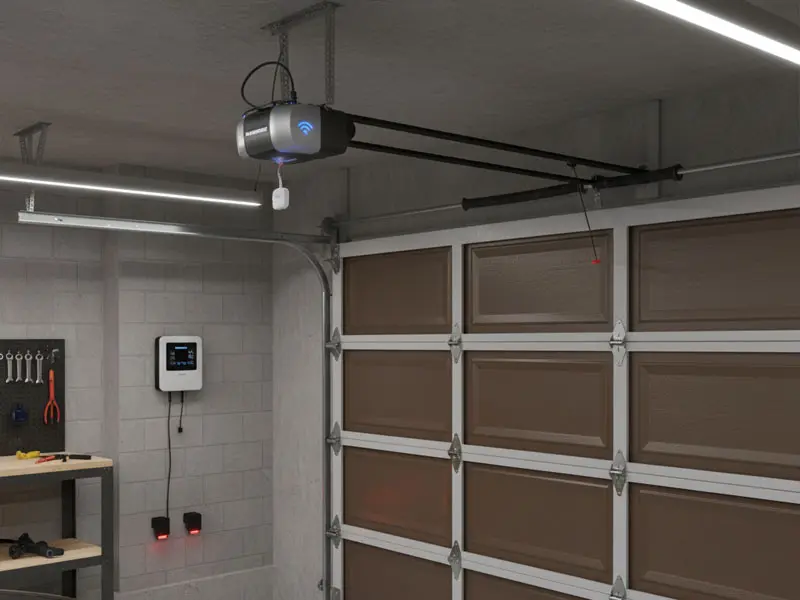
The door reaches the floor, rises again, and leaves the garage open. On another cold day, it climbs only partway before stopping. If your garage door opener struggles in cold weather, a limit or force setting might be involved, but ice, a binding door, and a broken spring can produce similar symptoms.
Do not increase the opener’s force to push through resistance. Changing a force or travel setting without identifying the cause may affect safety-reversal behavior or conceal a mechanical problem.
We’re MN Garage Door Service, a garage door service company in Maple Grove, Minnesota. We focus on finding the root cause rather than patching a symptom.
The following four checks explain what a technician may evaluate when an opener struggles in winter. They are questions to bring to a professional, not adjustments to make yourself. A setting should reflect a properly operating door’s travel, not hide resistance.
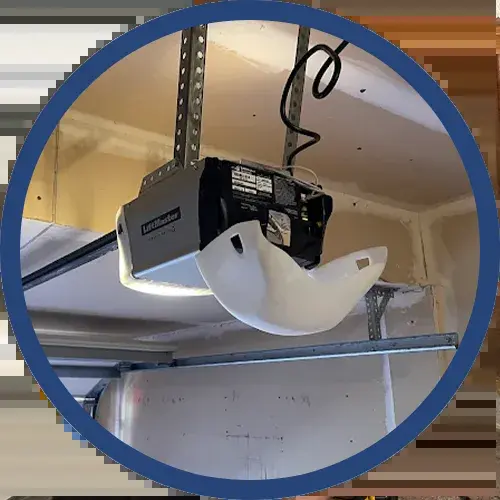
Safety First: Check the Door Before the Settings
If the door hangs crooked, appears off its tracks, has a loose or frayed cable, has a visibly broken spring, or feels unexpectedly heavy, do not use the garage door until a technician has inspected it.** Do not disconnect the opener to try to lift a suspect door, and do not work on springs, cables, drums, brackets, or other tensioned parts.
Door & Access Systems Manufacturers Association (DASMA) warns that a heavy door is likely out of balance and that a stronger opener is not the answer. Its garage door system safety guidance also assigns worn-cable replacement to a trained technician.
Keep children, pets, and belongings out of the door’s path. If you have already seen the door strain, stop cycling it. Never stand beneath a moving door to look for trouble. If it is stuck open and you cannot secure the opening without moving a suspect door, keep people away and arrange professional help rather than forcing it shut.
What Is Safe to Observe From a Clear Position?
Start with a single observation only if the door is straight, no spring or cable damage is visible, and it has not strained or jammed. Stand inside the garage well clear of the opening, press the wall control once, and watch the full path without approaching the moving door. If the system struggles, stop. Do not repeat cycles to see whether the problem will disappear.
| What You See | What It Could Mean | Safe Next Move |
| Door touches the floor, then reverses | Down-travel endpoint, contact reversal, seal/threshold resistance, or binding | Look for visible ice or an obstruction from a safe distance; request diagnosis if the cause is unclear. |
| Door stops short of the floor with a consistent gap | Down-travel setting or a door/track problem | Note the size and consistency of the gap; do not change the limit yourself. |
| Door opens only partway or stops at the same height | Up-travel setting, lock, ice, hardware, or balance trouble | Stop if it strains or tilts; note the stopping point for a technician. |
| Door closes then reverses before touching the floor | Photo-eye obstruction, travel/force sensing, or mechanical resistance | Look at the sensor path and indicator lights without bypassing them. |
| Opener hums or clicks while the door barely moves | Frozen bottom seal, broken spring, binding, or opener fault | Stop using it. Do not treat this as a force-setting invitation. |
You can note whether there is visible snow or ice at the threshold, a mat in the opening, a visible door lock in the engaged position, or an object between the photo eyes. Remove only a loose object you can reach while the door is still and without touching moving hardware.
If the bottom seal appears frozen, don’t ask the opener to break the bond. See winter garage door maintenance for context, not a diagnosis of this door.
The Four Limit and Force Questions, in the Right Order
A travel limit describes where the opener should stop in the opening or closing direction. Force sensing is the opener’s response when movement meets unexpected resistance. Older systems may have different adjustment arrangements; some newer systems learn force automatically after travel is programmed.
These are not interchangeable controls, and changing one can affect the safety-reversal system.
The LiftMaster 98022 manual, for example, tells a trained installer to set the door profile, program the travel, let its automatic force setup run, and then test safety reversal. It warns that incorrect travel-limit adjustment can interfere with reversal and that reversal must be tested after *any* adjustment.
Other models and brands can differ, so identify your unit by its label and manual before anyone proposes a setting change. Read the manufacturer manual example, especially adjustment pages 19–22.
1. Is the Closing Endpoint Correct, or Is the Door Meeting Resistance?
A door that reaches the floor and reopens may have an incorrect closing endpoint. A frozen seal, uneven threshold, object, or binding door can look similar. Diagnose before adjusting downward travel.
Watch for where the reversal begins. Does the door touch the floor squarely before it reverses? Is one corner lower? Is snow packed along the bottom seal? Note what you can see, then stop. If a corner is low or the door twists, do not use the garage door until a technician has inspected it.
A technician can inspect the threshold and door first, verify that the door moves freely, then compare the observed closed position with your particular opener’s programmed down limit. If correction is appropriate, the technician follows that model’s travel-setting instructions and completes the required safety tests.
Programming a lower endpoint to crush a frozen seal is not a repair; see our garage door opener repair service if the opener needs attention.
2. Is the Opening Endpoint Wrong, or Is the Door Stopping Under Load?
An opener may stop at a repeatable point because its programmed upward travel is short. It may also stop because a door binds, a lock is engaged, a spring has failed, or an opener component is malfunctioning.
A door that barely lifts, sags, or climbs unevenly is a door-and-hardware question before it is an up-limit question.
From a safe location, note whether the door reaches roughly the same height each time you have observed it, whether it starts level, and whether the opener makes a strained sound. You do not need to perform a second cycle for this article.
If you have not seen it operate, simply report that to the technician. Do not pull the emergency release to “test” a heavy-looking door.
The technician must establish free movement before a travel adjustment. The example LiftMaster manual places travel programming after door preparation and before automatic force setup. It calls for trained service if the door binds, sticks, or is out of balance.
3. Has Force Sensing Been Learned or Set for a Sound Door?
A force fault does not automatically mean the opener needs more force. On some models, force is automatically learned when travel is set. The LiftMaster 98022 manual describes an automatic opening-and-closing force-sensing cycle after both travel positions are programmed. It also explains what to do if setup does not complete.
This example does not tell you how your particular model works.
Why can this feel seasonal? The same winter day that raises questions about an opener can reveal an iced threshold or a door that no longer travels smoothly. A technician must determine which condition is actually present; the calendar cannot do that. A full system inspection is more useful than a blind opener adjustment when both the door and drive system need evaluation.
4. Does the Closing Safety Response Still Work After Any Change?
If the door reverses before it reaches the floor, first observe whether snow, a storage bin, or another object blocks the sensor beam. From a safe position, you can also note whether a sensor indicator is dark or blinking. Do not move wires, remove covers, bypass the sensors, or hold down the wall button to defeat the condition. A visible, loose obstruction can be removed only when the door is stopped and the path is safe; persistent trouble needs service.
Once a technician has resolved any binding and calibrated the opener to its own instructions, the technician should verify both photo-eye protection and the contact-reversal test in that manual. The LiftMaster 98022 test, for instance, uses a specified object on the floor and requires the door to reverse; its manual says to call a trained door systems technician if the test continues to fail.
That is an example for that model, not a universal test recipe for every door. See our related garage door sensor guidance for the separate question of sensor operation.
When a Setting Is the Wrong Repair
A setting can be corrected when the door is mechanically sound and the programmed endpoint or force-learning process is genuinely wrong. It is the wrong repair when the door needs physical work. You do not need to know which part failed to make the safer decision.
- Crooked, heavy, unbalanced, or off-track door; broken spring or loose cable:
- Do not use the garage door until a technician has inspected it. Do not release the trolley or attempt a balance test. Request door repair assessment.
- Frozen or stuck bottom seal: Do not run the opener against the ice or increase force. Keep the door stopped until the obstruction can be addressed safely.
- Opener hums, clicks, or stops with no clear cause: Stop repeated attempts. Mechanical and electrical faults can share a symptom; report the observations instead of opening the housing.
- Damaged cord, exposed wiring, suspected capacitor, control board, or travel module: Electrical and logic-board work is not a do-it-yourself repair. Disconnecting covers or probing energized components risks shock and can interfere with safety functions. Request a technician’s diagnosis.
- Failed or uncertain safety reversal: Do not use the automatic closer until it has been repaired and the required tests pass.
What Should a Service Visit Actually Resolve?
Ask the technician to explain whether the fault is in the door, opener, safety sensors, or some combination. A full system inspection checks hardware condition, observes travel, identifies the opener model and diagnostic information, and compares behavior with its manual. Only then should model-appropriate programming be considered.
Ask for the result of the safety-reversal checks after any adjustment. If a door cannot travel freely, it must be repaired before calibration is used to declare the job done. If the opener needs an internal electrical part or logic board, ask why that repair makes sense compared with replacing the unit. Age, exact part availability, and the condition of the door change that decision; none can be established by this guide alone.
What might it cost? There is no approved price range for this repair. An obstruction, door hardware, calibration, and opener components mean different scopes. Request an assessment and an itemized explanation of the cause, repair, and price. Do not accept a “quick force adjustment” instead of a diagnosis.
Frequently Asked Questions
Why Does My Garage Door Close Then Reopen in Cold Weather?
It may be meeting resistance at the floor, encountering an obstruction, reversing due to a safety sensor, or running past a poorly set down-travel endpoint. Ice at the seal is one possible winter-specific clue, not a certain diagnosis. Stop repeated cycles, check only visible external obstructions from a safe position, and have the door and opener assessed before any settings change.
Can I Turn Up the Opener Force in Winter?
No. Do not increase force to push through a frozen seal, binding door, or failed hardware. DASMA says the answer to a heavy door is not a more powerful opener and recommends trained service for sensitivity adjustment. A technician should find the resistance and use the manual for the exact model before deciding whether force calibration is even relevant.
What Is the Difference Between a Travel Limit and Force?
Travel is the intended stopping point in each direction; force sensing is how an opener responds to resistance during movement. On the LiftMaster 98022 example, travel is programmed and force is then learned automatically. Your opener may use a different arrangement. An incorrect travel setting can affect the safety-reversal system, so these are not casual seasonal tweaks.
Should I Pull the Emergency Release to Test the Door?
Not if the door is crooked, jammed, unexpectedly heavy, or has suspected spring or cable damage. Do not use the garage door until a technician has inspected it. If the door appears normal, consult your own model manual and a professional before deciding whether a manual-operation check is appropriate; this article does not ask you to perform one.
Why Does the Opener Hum but the Door Not Move?
A frozen threshold, locked or binding door, spring problem, or opener fault may be involved. The LiftMaster example manual lists ice, locks, broken springs, and internal faults in its troubleshooting sections. Stop cycling it. Do not open the motor housing or infer a bad capacitor from the hum alone.
Will a Limit Adjustment Fix a Door That Stops Halfway?
Only if the door is mechanically sound and the model-specific travel setting is actually wrong. A repeatable stopping point is useful information, but it does not rule out a lock, balance issue, damaged part, or fault code. A technician should verify the door first, then follow the exact opener manual and retest reversal after any change.
How Much Does a Cold-Weather Opener Repair Cost?
The price depends on what failed, whether the door needs mechanical repair, and whether the opener needs calibration, a component, or replacement. We do not have an approved price range for this specific diagnosis. Ask for the cause and a quoted scope before authorizing repairs; do not approve a force change as a substitute for fixing a bind.
Get an Answer Before Changing the Setting
When a garage door acts differently in cold weather, the useful question is not “Which screw should I turn?” It is “Does the door move safely, and what is making the opener stop?” That answer can spare you an unnecessary opener replacement or reveal a door problem a setting would conceal.
For a Maple Grove opener concern, contact MN Garage Door Service at (763) 335-1347. Tell us whether the problem occurs opening or closing, what the door did, and any code you could safely see. Ask for a door-and-opener assessment and a clear explanation of the repair before approving work. Do not use a crooked, heavy, or damaged door while waiting for an inspection.