Smart garage door technology has moved faster than most homeowners realize. What was once a basic motorized lift is now a connected system that links to your smartphone, your home network, and in many cases your broader smart home setup. The technology is genuinely useful, but its value depends entirely on the garage door company behind the installation. A company that can mount hardware is not the same as one that understands compatibility, network configuration, safety calibration, and what to do when the system needs attention after the visit ends.
What Smart-Tech Ready Actually Means for a Garage Door Company
Being smart-tech ready is not about having the right opener in the van. It is about knowing whether that opener is the right fit for the specific door, the specific garage, and the specific technology environment the homeowner already has. A garage door company genuinely prepared for this work can evaluate compatibility before anything is ordered, configure the system correctly during installation, calibrate all safety features under real operating conditions, and support the homeowner when the technology needs attention later. Those four things together are what smart-tech readiness looks like in practice.
Compatibility Assessment Before Anything Is Ordered
One of the clearest signs of a smart-tech ready garage door company is what happens before installation begins. A proper compatibility assessment covers door weight and panel construction, available headroom for the drive rail, existing wiring and power supply configuration, and the smart home platform the homeowner is already using. Each of these factors affects which opener is appropriate and how the installation should be approached.
We have arrived at jobs where a homeowner purchased a smart opener online based on a product review, only to find the device was incompatible with the door’s weight rating or could not be mounted in the available headroom. The opener was sitting in the box, the product was simply wrong for that garage, and the situation was avoidable. A compatibility assessment before any device is purchased is not a sales step. It is the work that makes the installation successful.
Understanding Rolling Code Technology and Why It Matters
Modern smart garage door openers use rolling code technology, a security standard where the encrypted signal between the remote or app and the opener changes with every single use. That encryption prevents outsiders from capturing the signal during one transmission and replaying it later, which was a real vulnerability in older fixed-code systems. A garage door company installing smart openers should understand this well enough to configure it correctly and troubleshoot it when something goes wrong.
Rolling code systems need to be re-paired when the opener loses power, when the home router changes, or after certain network events. One specific situation we see regularly is homeowners who upgraded to a newer router and enabled 5GHz-only mode. MyQ communicates over the 2.4GHz band, and an opener working correctly before the router change will fail to connect on a 5GHz-only network. The opener has not malfunctioned. The frequency is incompatible. A company that understands the platform diagnoses that in minutes. A company that does not may recommend a replacement that was never needed. Knowing the difference between a hardware problem and a network configuration issue is a basic competency for any garage door company working with modern connected systems.
LiftMaster and MyQ: What a Company That Knows the Platform Can Do
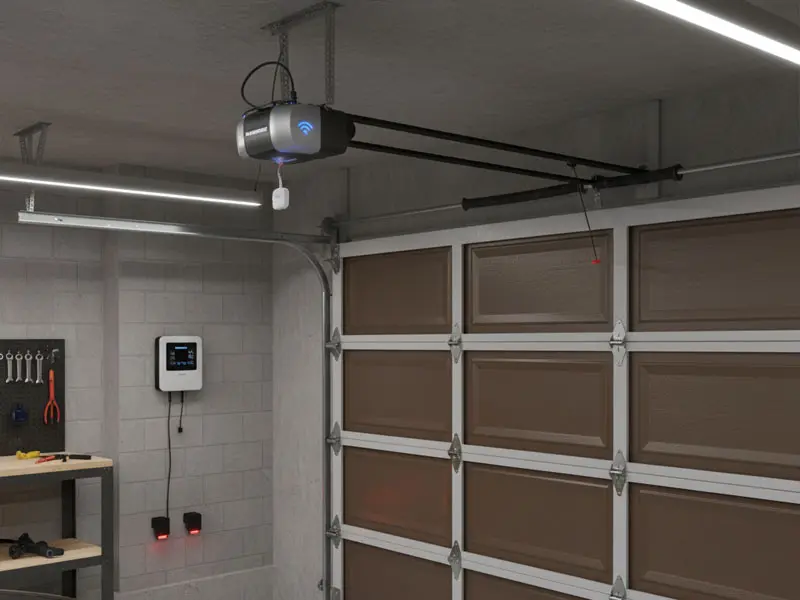
LiftMaster is one of the most widely installed opener brands in residential settings, and the MyQ platform is the connected ecosystem that brings smartphone control, real-time monitoring, and smart home integration to those systems. A garage door company that genuinely knows this platform does not just mount the hardware and hand the homeowner a manual. They pair the opener to the home network, set up the MyQ app, confirm that real-time monitoring is functioning correctly, and verify that the system is communicating as intended before the visit ends.
The difference shows up most clearly when something goes wrong after installation. We have resolved situations where a homeowner called reporting that their smart opener had stopped responding to the app after a power outage. In each case the opener was working correctly. What had been lost was the network pairing between the opener and the MyQ hub. A company familiar with the platform re-establishes that connection on the spot. A company that is not will often misdiagnose it as a hardware failure.
Installation Is Not Complete Without Safety Calibration
A smart opener installation that ends when the device is mounted and the app is connected is not complete. The safety calibration steps that follow are not optional, and they are the part of the process most directly tied to protecting the people and property using the door every day.
Force limits and travel limits are two separate calibrated settings stored on the opener’s logic board. Travel limits control where the door stops at open and closed. Force limits control how much resistance the motor applies before the auto-reverse safety feature activates. Both must be verified after every installation under real operating conditions, not at rest. A force limit that tests correctly in a stationary check can behave differently once the door is under the load of an actual cycle.
This calibration process is not arbitrary. UL 325 is the safety standard governing automatic garage door operator performance in the United States, and it defines the requirements for auto-reverse response, force limits, and entrapment protection that compliant openers must meet. A garage door company completing a proper installation verifies that the system performs to those requirements before the job is finished, not just that the opener is mounted and the app is working.
After calibration, the auto-reverse feature is tested with a physical obstruction placed in the door’s path to confirm it reverses on contact without hesitation. The safety sensors are checked for correct alignment and confirmed to be reading an uninterrupted beam. These are the steps that make a smart opener installation safe and complete, and they are the steps a homeowner should ask about before the technician leaves.
What Ongoing Smart-Tech Support Looks Like
Smart garage door systems are not install-and-forget technology. Network changes, power events, and shifts in how the door performs over time can all affect how the connected system behaves. A garage door company that is genuinely smart-tech ready has a clear answer for what happens after installation when something needs attention.
That answer should include the ability to re-pair the opener when a router changes, recalibrate force and travel limits if the door’s operation shifts, and diagnose app connectivity issues without assuming the hardware has failed. At MN Garage Door Service, that depth of support comes from a team built on second-generation expertise in the garage door trade, field knowledge that extends beyond installation into how these systems behave over time in real homes. Real-time technician tracking and arrival notifications reflect the same attention to a complete service experience that a smart-tech ready installation requires.
What to Ask a Garage Door Company About Smart Technology
Before hiring a garage door company for smart opener work, a few direct questions reveal whether the company is genuinely equipped for the job.
Ask which opener brands and connected platforms they install and actively support. Ask how they handle a lost network connection after installation. Ask whether force and travel limits are calibrated under real operating conditions and whether the auto-reverse feature is tested before they leave. Ask whether they walk the homeowner through the app setup before the visit ends. A garage door company that answers those questions with specific, confident detail has done this work thoroughly before. Vague or general answers are worth noting.
Why the Right Garage Door Company Makes the Technology Worth It
Smart garage door technology is only as good as the company that installs, calibrates, and supports it. An opener mounted without proper safety calibration creates a liability. A device installed by a company unfamiliar with the platform creates a frustrating ownership experience where the homeowner is left troubleshooting an app they were never shown how to use. A smart opener installed by a company that understands compatibility, knows the platform, calibrates the safety features to UL 325 requirements, and stays available when the technology needs attention delivers on what the product actually promises. The right garage door company does not make the technology feel simple by skipping steps. They make it feel simple because every step was done correctly the first time.
Schedule Your Smart Opener Installation With MN Garage Door Service
If you are looking for a garage door company that installs and supports LiftMaster openers with MyQ connectivity, MN Garage Door Service brings the field experience and platform knowledge to do the job correctly from the first assessment to the final safety check. Our team handles compatibility evaluation, full system installation, force and travel limit calibration under real operating conditions, app setup, and post-install support across the Twin Cities metro and surrounding communities. Schedule your smart opener consultation with MN Garage Door Service today.